
Trying to Cut Calories? Don’t Cut Your Protein
Why protein should be set in grams first — especially during weight loss and GLP-1 therapy
Trying to Cut Calories? Don’t Cut Your Protein. Walden Local Meat Delivery
One of the biggest mistakes people make when trying to lose weight is cutting everything.
Less breakfast.
Less lunch.
Less dinner.
Fewer calories.
And, without realizing it, less protein.
That can be exactly the wrong thing to do.
Protein should not simply be reduced because your total calories have been reduced.
For practical nutrition planning, protein should be established as a daily amount in grams first — not treated as a percentage of calories that automatically shrinks when calories shrink.
That distinction becomes especially important during weight loss and particularly important for people taking GLP-1 medications that dramatically suppress appetite.
Protein Is Not a Percentage You Shrink With Your Calories
Protein provides amino acids your body needs every day to maintain and repair tissue, produce enzymes and hormones, support immune function and, critically, preserve muscle.
Determine how much protein you need.
Meet that amount.
Then build the rest of your calories around it.
Here is why percentages can be misleading.
Suppose someone eats 2,000 calories per day and gets 20 percent of those calories from protein.
That provides about 100 grams of protein.
Now that person reduces food intake to 1,200 calories.
If protein stays at exactly 20 percent of calories, protein intake falls to only about 60 grams.
Same percentage.
Forty fewer grams of protein.
Your muscles do not care that the percentage stayed the same.
They need amino acids.
That is why I do not want people automatically lowering their protein intake just because they are eating fewer calories.
This Is One of the Major Concerns With GLP-1 Weight Loss
Medications such as semaglutide and tirzepatide can dramatically reduce appetite.
That is part of how they help people lose weight.
But appetite suppression can also mean:
Smaller meals.
Skipped meals.
Less interest in food.
Getting full after only a few bites.
Nausea or other gastrointestinal symptoms that make eating more difficult.
And ultimately, much less protein unless someone is deliberately paying attention to it.
Meanwhile, the scale may be dropping quickly and everything appears to be working beautifully.
But there is an important question:
What are you losing?
Weight loss and fat loss are not necessarily the same thing.
When body weight falls, some of that loss can come from lean tissue, including muscle.
That is something we should actively try to minimize.
Muscle Matters More Than the Number on the Scale
Muscle is not simply about appearance.
Muscle helps you:
Maintain your balance.
Get out of a chair.
Climb stairs.
Carry groceries.
Support your bones.
Maintain metabolic health.
Recover from illness or injury.
Remain physically active.
Continue living independently.
As we get older, preserving muscle becomes increasingly important.
If someone loses 30 pounds but loses a substantial amount of muscle along with the body fat, the smaller number on the scale does not tell the whole story.
The goal should not simply be:
Lose weight.
The better goal is:
Lose excess body fat while preserving as much muscle as possible.
Adequate protein is one of the most important tools we have for doing that.
So How Much Protein Do You Actually Need?
There is no single protein number that is right for everyone.
Needs vary according to age, body composition, activity level, health status, whether you are losing weight, and whether you are doing resistance exercise.
But during active weight loss — particularly when preserving muscle is a priority — recommendations commonly fall around 1.2 to 1.6 grams of protein per kilogram per day.
And for many older adults trying to preserve muscle during weight loss, I would be much more interested in the upper portion of that range than in simply meeting the minimum adult protein requirement.
A 150-pound person weighs approximately 68 kilograms.
At:
1.2 grams per kilogram = about 82 grams of protein
1.4 grams per kilogram = about 95 grams
1.5 grams per kilogram = about 102 grams
1.6 grams per kilogram = about 109 grams
So yes, a target around 100 grams or more can be completely reasonable for a 150-pound adult when muscle preservation is a priority.
That is very different from simply telling someone to eat a certain percentage of calories as protein.
But Body Composition Matters
There is another important distinction.
If someone is carrying a substantial amount of excess body fat, simply calculating protein from total scale weight can overestimate protein needs.
In those circumstances, clinicians may base protein recommendations on lean body mass, ideal body weight or adjusted body weight rather than actual body weight.
That is a much more individualized approach.
So I do not want people blindly multiplying their total body weight by a number and assuming the result is automatically correct.
The principle is:
Determine an appropriate gram target based on the person — not on an arbitrary percentage of calories.
And once that target is established, do not automatically slash it just because calories come down.
People with kidney disease or other medical conditions that affect protein metabolism should discuss their individual protein needs with their healthcare professional.
Don’t Save All Your Protein for Dinner
Total daily protein matters, but distribution matters too.
Many people eat very little protein at breakfast.
Toast.
Cereal.
A muffin.
Fruit.
Maybe coffee.
Lunch may contain a little more protein.
Then nearly all of the day’s protein arrives at dinner.
That is not the pattern I want people relying on if preserving muscle is the goal.
A much better approach is to deliberately include meaningful protein throughout the day.
Think:
Protein at breakfast.
Protein at lunch.
Protein at dinner.
And fill any remaining gap when needed.
That might include eggs, Greek yogurt, cottage cheese, fish, chicken, turkey, beef, pork, tofu, tempeh, beans, lentils or other protein-rich foods depending on your preferences.
Food First: What This Looks Like at My House
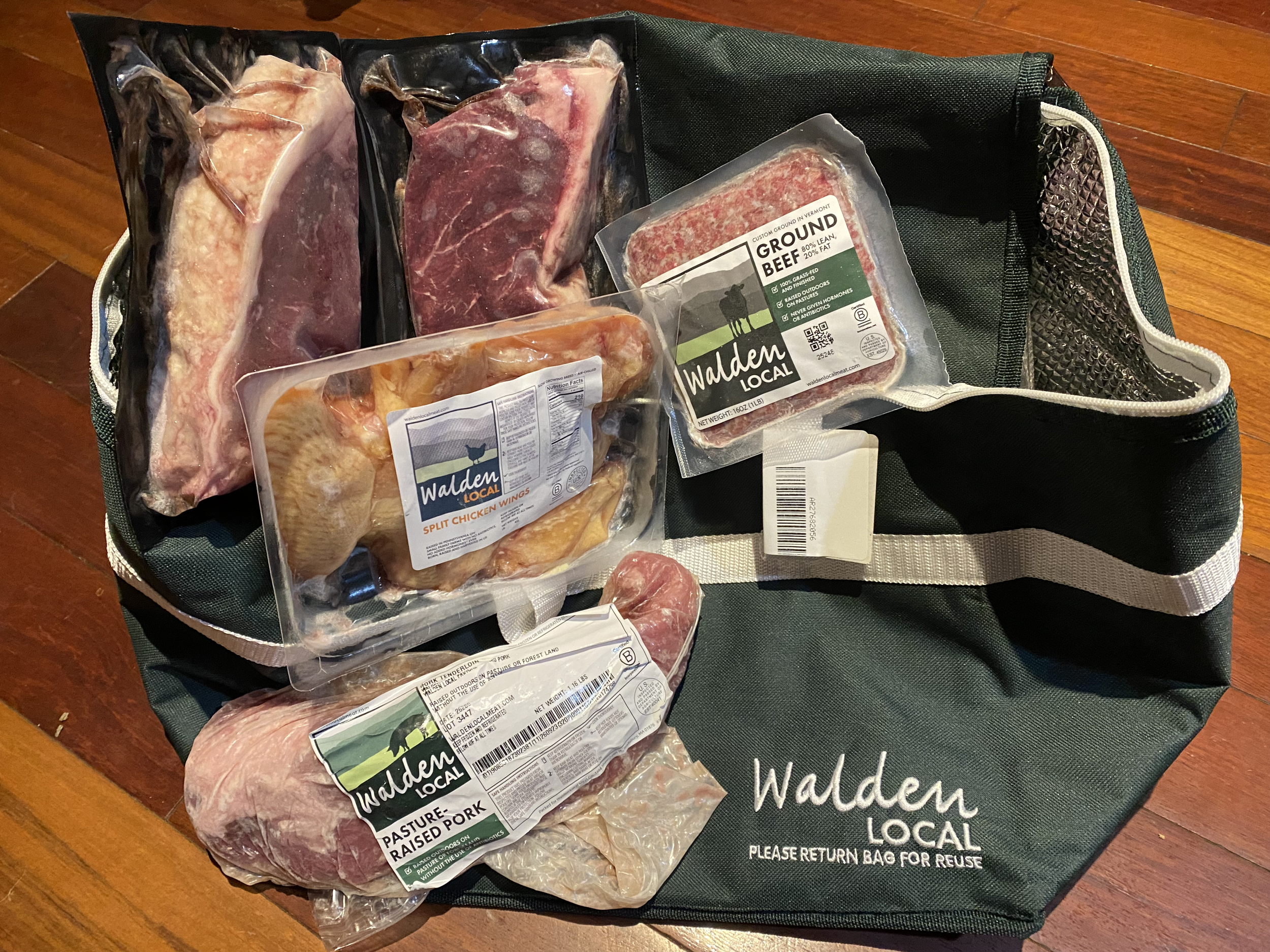
My son gifted me a subscription to Walden Local, and it has genuinely been life-changing for me.
They deliver directly to my door.
The food has consistently been top quality.
And their customer service has been excellent.
My deliveries include real whole-food protein sources such as beef, ground beef, pork and chicken.
That makes keeping protein at the center of my meals much easier.
This is what I mean when I say:
Food first.
A protein powder can be extremely useful when someone cannot eat enough protein, especially when appetite is low.
But the supplement should fill a nutritional gap.
It should not replace a diet built around nutrient-dense food.
And Don’t Forget Strength Training
Protein alone cannot completely protect muscle.
Muscle also needs a reason to stay.
That reason is resistance.
Strength training sends your body an important message:
We still need this tissue.
That can mean traditional weights.
Resistance bands.
Weight machines.
Body-weight exercises.
The exact program needs to fit the person’s health, mobility and ability.
But especially during intentional weight loss, the combination matters:
Adequate protein.
Resistance exercise.
Appropriate calorie reduction.
Not simply eating as little as possible and celebrating every pound that disappears from the scale.
What Protein Supplement Do I Recommend?
Food comes first.
But sometimes reaching your daily protein target with food alone is difficult.
That can be particularly true when appetite has been reduced by a GLP-1 medication.
When whey protein is tolerated, it is generally my first choice.
Whey is a complete, high-quality protein containing all of the essential amino acids and is particularly useful for supporting muscle protein synthesis.
For people who want something simple, I like Designs for Health Whey Protein in the unflavored version.
I particularly like that it is straightforward without turning protein supplementation into dessert.
Unflavored whey can be added to a smoothie, yogurt, oatmeal or other foods without adding another sweet flavor to the diet.
You can find the Designs for Health Whey Protein I recommend here.
If you avoid dairy, prefer plant-based protein or simply want to compare other options, you can search the wider protein selection through my Fullscript Apothecary.
The goal is not to collect protein powders.
The goal is:
Know how many grams of protein you need.
Get as much as you reasonably can from real food.
Use a quality supplement when necessary to close the gap.
Don’t Let Appetite Suppression Become Poor Nutrition
This may be one of the most important conversations we need to have as GLP-1 medications become increasingly common.
Appetite suppression is not the same thing as optimal nutrition.
Eating less does not automatically mean eating better.
And rapid weight loss does not automatically mean healthy weight loss.
When the amount of food someone can comfortably eat becomes much smaller, the nutritional value of every bite becomes more important.
Protein cannot simply become collateral damage.
Neither can vitamins, minerals, fiber, essential fatty acids and the other nutrients our bodies require.
Someone using a medication that substantially reduces appetite should be paying attention not only to body weight, but also to the adequacy of what they are still eating.
The Bottom Line
If you reduce your calories from 2,000 to 1,400, you should not automatically reduce your protein intake by 30 percent.
If a GLP-1 medication cuts your appetite dramatically, your body's requirement for amino acids does not suddenly fall by the same percentage.
And if your weight is dropping rapidly, do not assume everything you are losing is body fat.
Pay attention to:
Protein.
Muscle.
Strength.
Nutrition.
Function.
Especially as we age, maintaining muscle is about far more than appearance.
It is about maintaining the strength, balance and physical capacity that allow us to continue living independently.
Set your protein target first.
Then build the rest of your nutrition around it.
Because when calories come down, protein is not the place to save them.
Join My Community
At TotalWellCoach, my goal is to make health information understandable enough that you can actually use it.
No miracle promises.
No supplement pile for the sake of selling supplements.
We start with the foundations: food, movement, muscle, sleep and the nutrients your body actually needs.
If this article helped you, join the TotalWellCoach community and share it with someone who is trying to lose weight — especially someone using a GLP-1 medication.
They may be watching the number on the scale.
Help them remember to protect the muscle underneath it.