
When No One Responds to Your Pain
Emotional invalidation isn't only something you feel. When it becomes chronic, your body may carry it too.
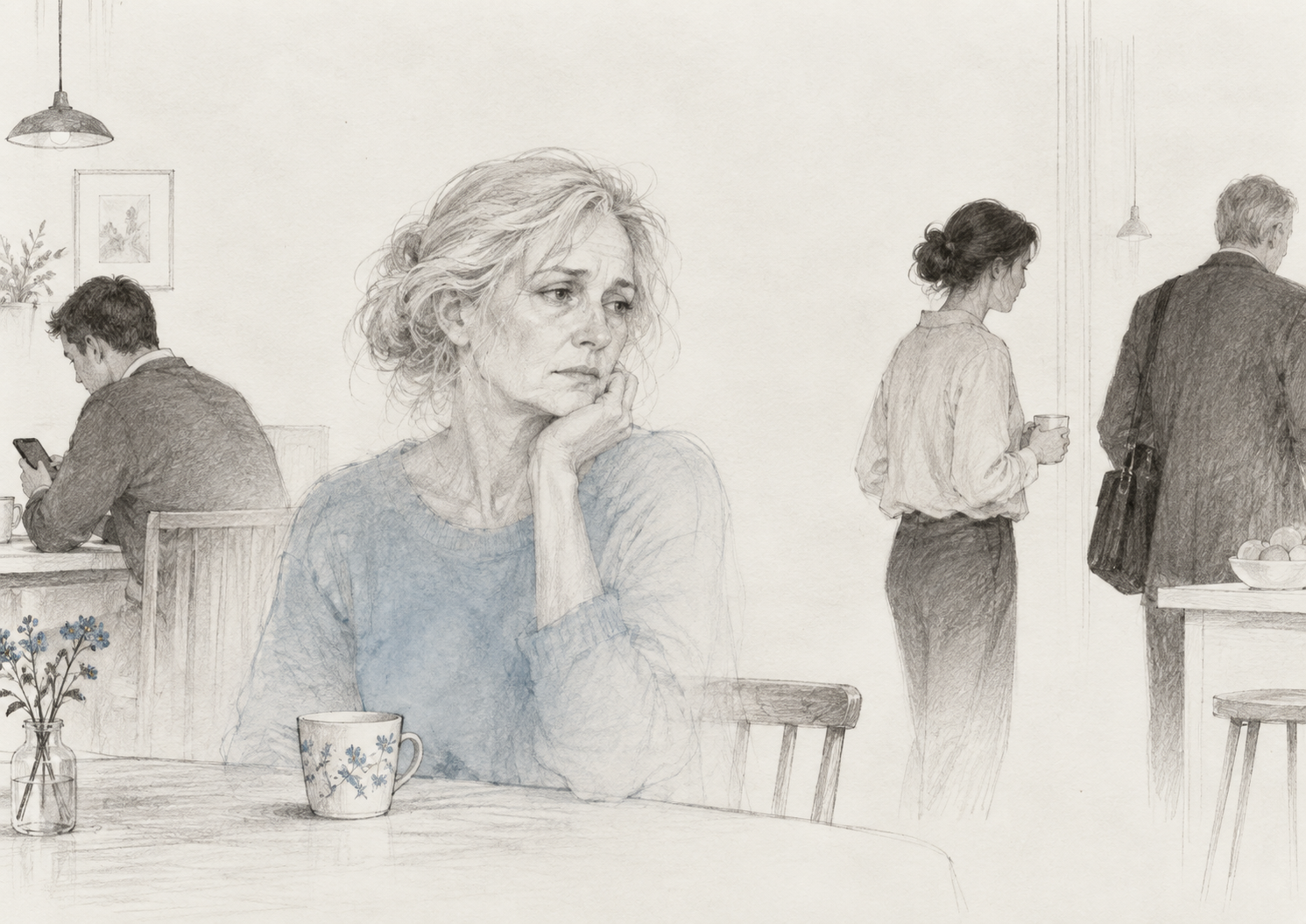
Silent Gaslighting
There is a form of emotional pain that can be surprisingly difficult to explain. Something is wrong. You are hurting. You tell someone. And nothing happens.
There is no acknowledgment, no reassurance, no attempt to understand, and no sense that another human being has recognized your distress and moved toward you. I think of one version of this experience as “gaslighting by silence” — when a person's reality is effectively denied not through an argument, but through the absence of acknowledgment.
That idea matters beyond relationships. It matters to health.
Humans Are Built for Connection
We sometimes talk about emotional health as though it exists somewhere separate from the body. It doesn't. Human beings are profoundly social creatures, and connection, belonging and safety within relationships affect the way we experience stress.
Research on social rejection and exclusion has found that these experiences can affect mood, cognition and physical well-being. Research on social pain also suggests that some of the systems involved in processing physical pain overlap with those involved in social rejection.
That does not mean emotional pain and physical injury are identical. It means your body does not necessarily regard rejection as trivial just because nobody can see the wound.
When the Stressor Never Resolves
Think about what normally helps a stressful experience end. Something happens, you react, the situation resolves, and your nervous system receives the message that the threat has passed.
Interpersonal stress can be different.
You say, I'm hurt. Nothing happens. You try again. Still nothing. You begin wondering whether you're overreacting. You replay the interaction. You anticipate the next one. You become watchful.
The original moment may be long over, but your body may never have received a convincing signal of safety or resolution.
That matters because chronic stress is different from short-term stress. When stress continues over a prolonged period, it can affect sleep, mood, energy, concentration and overall well-being. The lesson is not that every painful relationship will make you physically ill. It is that prolonged emotional stress deserves to be taken seriously.
Invisible Pain Is Still Pain
One of the most damaging parts of chronic invalidation may be what happens inside your own head. If nobody responds to your distress, you may begin questioning whether you are entitled to feel distressed at all.
Maybe I'm too sensitive. Maybe I'm making too much of this. Maybe I should just get over it. Maybe there's something wrong with me.
Now you are not simply experiencing the original pain. You are fighting yourself about whether you're allowed to have it.
Sometimes the healthier question is not, Why can't I stop feeling this? It is: What happened to me, and what is my body still trying to tell me about it?
You Don't Need Someone Else's Permission to Recognize Pain
Validation is sometimes misunderstood as agreement. It isn't. Two people can remember an event differently and still acknowledge each other's emotional experience.
Someone can say, That wasn't my intention, but I understand that it hurt you. Or, I see how much you're struggling. Or simply, I'm here.
Those responses don't solve everything, but they communicate something fundamental: I see you.
The absence of that response, particularly over and over again in important relationships, can be profoundly destabilizing.
Start by Becoming Visible to Yourself
We cannot force another person to acknowledge our experience. But we can stop requiring their agreement before we acknowledge it ourselves.
That may begin with remarkably simple statements: I am hurting. Something happened that affected me deeply. My body's reaction deserves my attention rather than my contempt. I need connection, rest, support or distance.
You don't have to decide immediately what the relationship means. You don't have to diagnose anybody. You don't have to prove your case to a jury. Start by recognizing what is happening inside you, and then ask what would help your body experience more safety today.
That might be sleep, food, movement, time outdoors, a conversation with someone who actually listens, professional support, a boundary, or simply permission to stop pretending everything is fine.
Health Is More Than Lab Numbers
At TotalWellCoach, I talk about nutrition, movement, metabolism, sleep, aging and the many physical systems that contribute to health. But we can't talk meaningfully about health without talking about the environments in which our bodies are trying to function.
Sometimes the question isn't simply, What supplement do I need?
Sometimes it is: What am I carrying, and how long have I been carrying it alone?
Your emotional environment is part of your health environment. Pay attention to it.
Join My Community
Total Well Coach is about whole-person health — nutrition, movement, sleep, metabolism, aging, resilience and the emotional environments in which our bodies are trying to function.
If you're trying to rebuild your health after a prolonged period of stress, exhaustion or major life change, I offer private coaching beginning with a complimentary 30-minute conversation. Sometimes improving health starts with numbers on a lab report. Sometimes it starts with finally recognizing what your body has been carrying.
I also write more specifically about coercive control, gaslighting, manipulation, emotional abuse and relationship patterns at DomesticAssault.com. If this article gave you language for something happening in a relationship, that is where I explore those patterns more deeply and help readers recognize experiences that can be extraordinarily difficult to name.
You are allowed to take your own well-being seriously — physically, emotionally and relationally.