
Americans are living longer, but how many of those additional years are spent in good health? It's time to rethink what healthy aging really means.
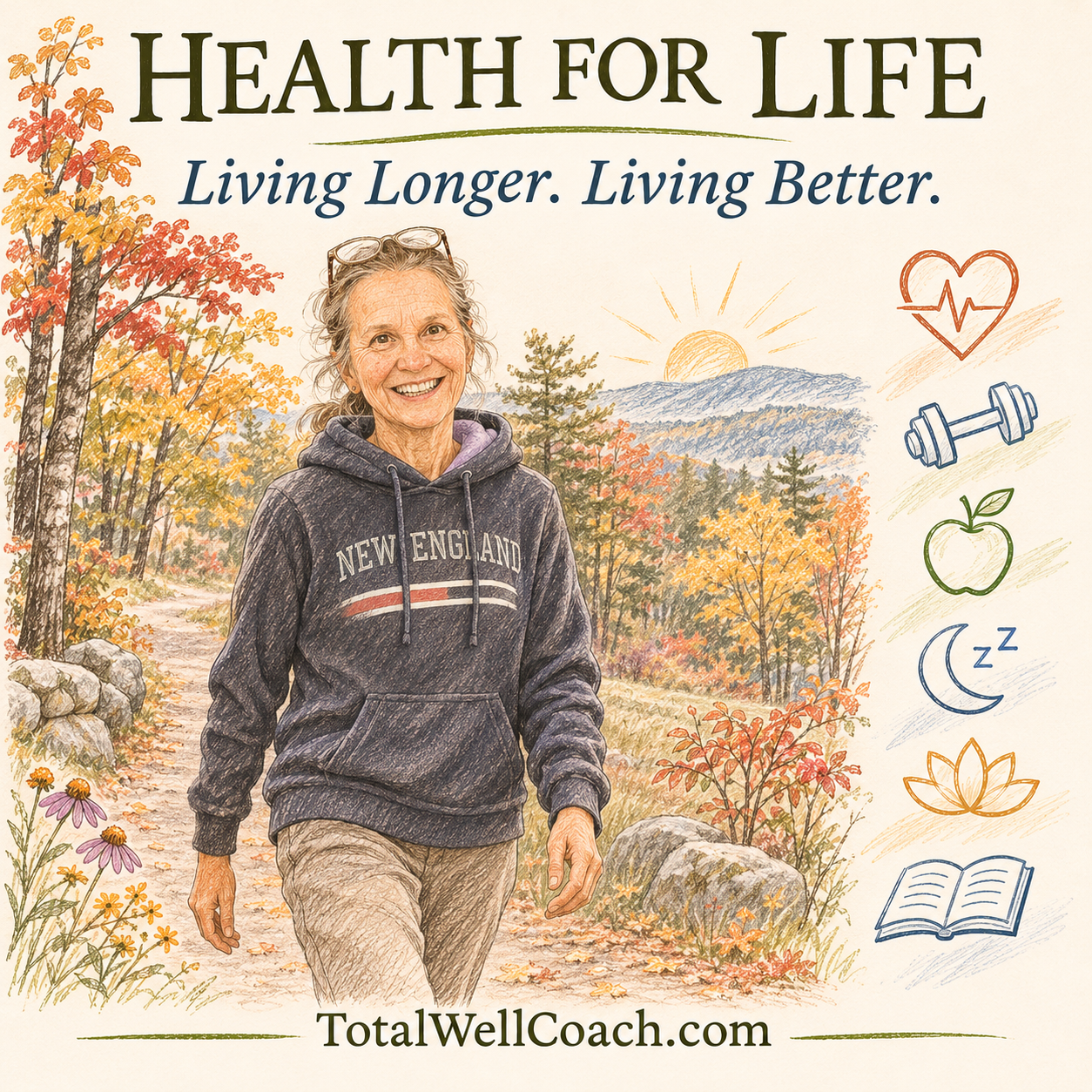
Health for Life: Are We Living Longer or Just Spending More Years Sick?
We celebrate advances in medicine that help people live longer. We have remarkable diagnostic technologies, medications, surgical procedures, and treatments that would have been unimaginable a generation ago.
But there's another question we should be asking.
How many of those additional years are we actually living in good health?
As a registered nurse with more than four decades of experience, I've watched medicine accomplish extraordinary things. I've also watched people spend years managing chronic conditions, juggling medications, navigating specialists, and gradually losing abilities they once took for granted.
Now, in my seventies, I think about these questions from both sides of the examination table.
I want to live a long life. But I also want to remain capable, independent, curious, productive, and engaged in the world around me. I suspect most of us want the same thing.
And that brings us to an important distinction between lifespan and healthspan.
Living Longer Doesn't Necessarily Mean Living Healthier
Lifespan is how long we live. Healthspan refers to the years we spend in relatively good health, with the ability to function and participate in life.
According to the Centers for Disease Control and Prevention, U.S. life expectancy reached 79.0 years in 2024, an increase from 78.4 years in 2023.
That's encouraging, especially after the devastating losses of the COVID-19 pandemic.
But the World Health Organization provides another statistic worth examining.
Between 2000 and 2023, healthy life expectancy in the United States increased from approximately 64.5 to 64.6 years.
Twenty-three years. One-tenth of a year gained in healthy life expectancy.
Over that same period, WHO estimates that overall life expectancy increased by 1.8 years.
Healthy life expectancy is a population-level statistical estimate that accounts for time lived with illness or disability. It does not mean that Americans suddenly become unhealthy at age 65. Many people remain active and independent well into their eighties and nineties.
Nevertheless, the trend raises a serious question about how effectively we're improving the quality of the years we live.
We're making progress in keeping people alive. We need to make more progress in keeping people healthy.
We Have a Healthcare System Built Around Disease
Modern medicine is extraordinarily capable when something goes wrong.
We can replace damaged joints, open blocked arteries, treat infections, manage diabetes, and help people survive cancers that were once considered death sentences.
I know personally how important those advances are.
But what happens during the years before someone develops diabetes, suffers a heart attack, loses mobility, or experiences a serious decline in health?
Too often, we wait.
We monitor blood pressure after it becomes elevated. We treat blood glucose after it enters the diabetic range. We address frailty after someone falls. We investigate nutritional deficiencies after symptoms appear.
Of course, screening and preventive medicine already exist, and not every disease can be prevented or predicted. But prevention, early recognition, and sustained support deserve a much larger role in everyday healthcare.
I would like to see us place as much value on preserving health as we place on treating illness.
That begins with understanding how our bodies function long before serious symptoms develop.
Health Doesn't Exist in Separate Compartments
One of the most important lessons I've learned through nursing and functional medicine is that the body's systems are interconnected.
Sleep affects metabolism. Chronic stress can influence blood pressure, glucose regulation, mood, and immune function. Nutrition affects muscle, bone, energy, and recovery. Physical activity influences cardiovascular health, insulin sensitivity, balance, cognition, and emotional well-being.
A person complaining of fatigue may be experiencing poor sleep, anemia, medication effects, depression, thyroid disease, inadequate nutrition, or several contributing problems.
Treating an isolated symptom without understanding the larger picture can leave important questions unanswered.
That doesn't mean every symptom has a hidden cause or requires extensive testing. It means our health deserves thoughtful assessment rather than assumptions.
The body is constantly responding to what we eat, how we move, how we sleep, the medications we take, our relationships, our environment, and the stresses we experience.
Those connections matter throughout life, and they become especially important as we age.
Muscle May Be One of Our Most Important Investments
When people think about aging, they often focus on weight.
I would rather see more attention paid to strength.
Muscle helps regulate glucose, supports metabolism, protects joints, and makes everyday activities possible. It helps us climb stairs, carry groceries, get up from a chair, maintain balance, and recover from illness.
As we get older, preserving muscle becomes increasingly important.
This requires adequate nutrition, particularly protein, along with regular resistance exercise appropriate for our abilities and health conditions.
It doesn't necessarily require a gym membership. Body-weight exercises, resistance bands, light weights, gardening, and other physical activities can all contribute.
Walking is excellent for many aspects of health, but resistance training provides additional benefits for maintaining strength.
And balance deserves attention too.
The ability to stand on one foot, navigate uneven ground, or recover from a stumble may determine whether we remain independent or experience an injury that changes our lives.
Maintaining independence requires maintaining the physical abilities that make independence possible.
Metabolic Health Deserves More Attention
Blood glucose, insulin regulation, blood pressure, cholesterol, abdominal fat, and cardiovascular fitness are all connected to long-term health.
Metabolic problems can develop gradually, sometimes without obvious symptoms.
That's one reason I encourage people to understand their laboratory results and discuss their individual risk factors with their healthcare professionals.
A single number rarely tells the whole story. Trends, family history, medications, symptoms, and overall cardiovascular risk all matter.
The objective is to identify meaningful risks early enough to respond appropriately.
And the response doesn't always begin with medication.
For many people, improving nutrition, increasing activity, addressing sleep problems, managing weight when indicated, and reducing tobacco or alcohol exposure can make a significant difference.
Medications are also valuable and sometimes essential. Effective prevention means using the right tools for the individual, based on evidence and informed decisions.
Sleep, Stress, and Recovery Are Part of Healthy Aging
We often treat sleep as something we can sacrifice to accomplish more.
But chronic sleep problems can affect attention, mood, metabolism, cardiovascular health, and everyday functioning.
Poor sleep can also make exercise harder, increase fatigue, and interfere with the decisions we make about food and physical activity.
Stress deserves equal attention.
Persistent emotional strain, financial insecurity, caregiving responsibilities, isolation, and uncertainty can all influence health. These pressures may interfere with sleep, increase unhealthy coping behaviors, and make it more difficult to maintain healthy routines.
For older adults, these issues can become particularly complicated.
Someone living alone on a fixed income may understand perfectly well that nutritious food, a warm home, exercise, and regular healthcare are important. Understanding what we need and having the resources to obtain it are two very different things.
We cannot have an honest conversation about healthy aging without acknowledging those realities.
Health Literacy Should Begin Long Before Old Age
I believe health education deserves a much more prominent place in American life.
Children should learn how their bodies function, why sleep matters, how nutrition influences development, the importance of physical activity, and how to recognize signs that something may be wrong.
Adults should have access to clear, understandable information about disease prevention, medications, screening recommendations, and navigating healthcare decisions.
And older adults should feel comfortable asking questions about their care.
What is this medication supposed to accomplish? What are the potential side effects? Is there an alternative? What does this laboratory result mean? How does this treatment affect my ability to function?
These are reasonable questions.
An informed patient can participate more effectively in healthcare decisions, recognize changes that deserve attention, and work more confidently with clinicians.
Health literacy is a lifelong skill, and it should never be treated as a privilege reserved for people with medical backgrounds.
What Can We Do Right Now?
We cannot control every factor that influences aging. Genetics, disease, injury, environment, access to healthcare, and circumstances beyond our control all play important roles.
But there are meaningful things we can do to improve our chances of remaining healthy and independent.
Start by paying attention to the fundamentals.
Know your numbers. Understand your blood pressure, appropriate cholesterol and glucose measurements, and other screening results relevant to your personal risk.
Protect your muscle. Eat adequate protein, stay physically active, and include resistance exercise when appropriate.
Keep moving. Walking, stretching, gardening, swimming, and other enjoyable activities help preserve mobility and function. Include balance training and activities that challenge your coordination.
Take sleep seriously. Persistent fatigue, snoring, interrupted sleep, or excessive daytime sleepiness may deserve evaluation.
Review medications periodically. Ask about interactions, side effects, and whether each medication is still necessary. Never discontinue prescribed treatment without appropriate guidance.
Stay connected. Relationships, meaningful work, interests, and community participation contribute to emotional health and quality of life.
Pay attention to changes. New weakness, unexplained weight loss, persistent fatigue, shortness of breath, or changes in balance and cognition deserve assessment rather than automatic dismissal as aging.
And perhaps most importantly, remain curious about your health.
Ask questions. Learn what the evidence shows. Participate in decisions. Don't assume that every new limitation is simply something you must accept.
A Better Measure of Healthcare Success
Imagine if we measured our healthcare system's success by more than survival rates, procedures performed, and medications prescribed.
What if we also measured how many people remained independent at 80? How many adults could maintain strength and mobility? How many children entered adulthood with better metabolic health? How many people could manage chronic conditions without losing their quality of life?
What if health education began in childhood and continued throughout adulthood?
What if prevention, nutrition, physical activity, mental health, and early intervention were treated as essential components of healthcare rather than optional extras?
These changes would require investment, better access, and a willingness to consider health across the entire lifespan.
Some of the benefits would take years to become evident. Others could begin with the next appointment, the next school curriculum, or the next community health initiative.
Health for Life
At 73, I don't expect my body to perform exactly as it did at 33. I understand that aging brings changes, and that even people who do everything right can experience serious illness.
But I also know how much function, strength, energy, and confidence matter.
Healthy aging isn't about chasing youth or promising ourselves that we'll never get sick. It's about giving ourselves the best possible opportunity to continue living fully.
We should want more years of life.
We should also want more life in those years.
And I believe that goal deserves to be at the center of how we think about health, healthcare, and aging in America.
Have a Question About Your Health or Healthy Aging?
After more than 40 years in nursing and 15 years in functional medicine and wellness coaching, I believe some of the most important conversations begin with a simple question.
What concerns you most about your health, aging, or maintaining your independence?
I welcome your questions and ideas. And if you're looking for more personalized guidance, explore how health and wellness coaching can help you identify priorities, develop healthier habits, and take a more active role in your well-being.
Explore Health & Wellness Coaching
You can also browse the Health and Wellness Library for more free articles and practical information.
Let's make the years ahead healthier ones.