
The Scale Is Lying to You
Why real change doesn’t start with weight — and never has
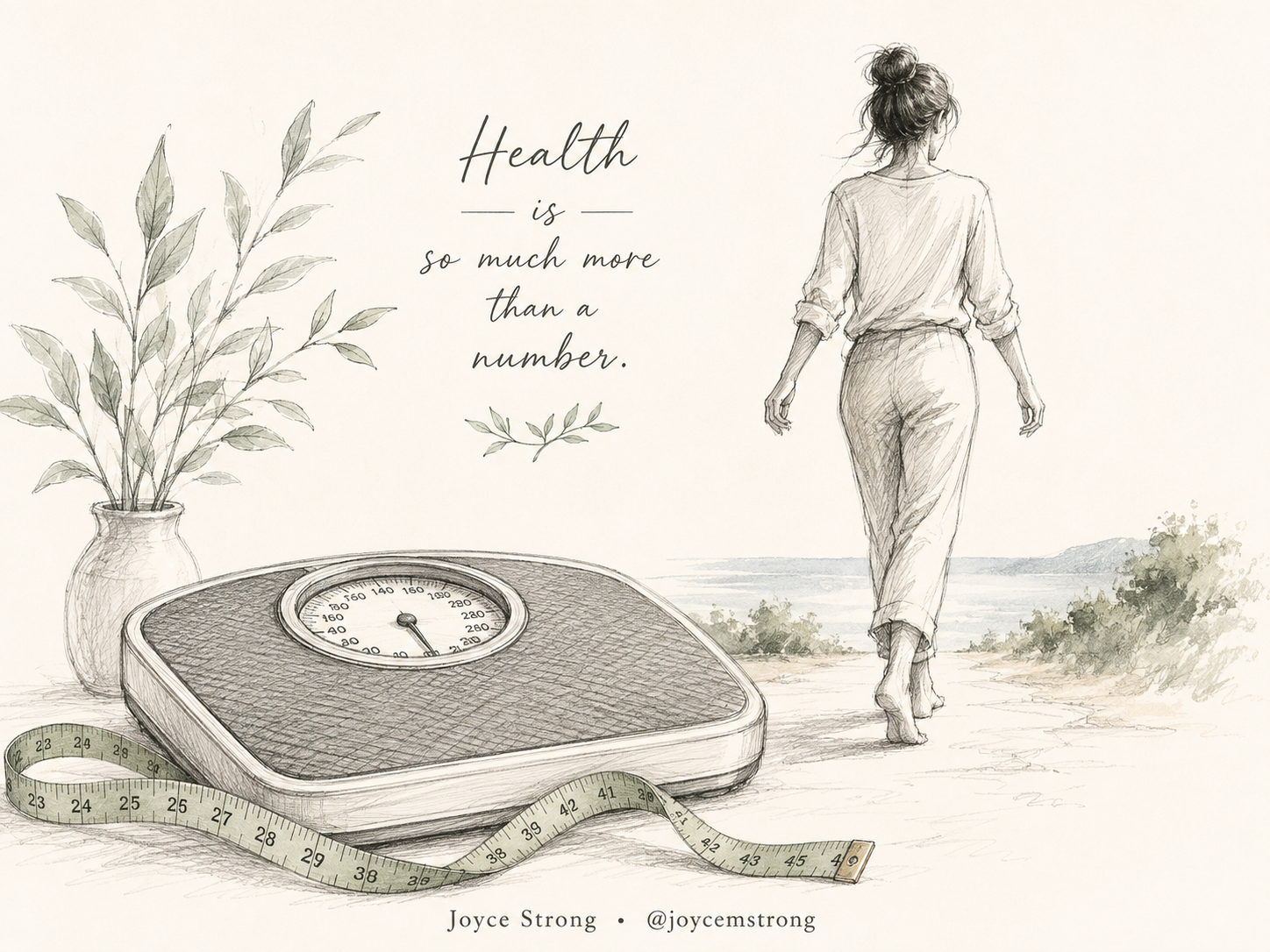
The Scale is Lying to You
Why real change doesn’t start with weight — and never has
Every January, the same ritual plays out. Gyms fill with people in new sneakers and borrowed hope. Billboards glow with before-and-after bodies. Diet programs promise reinvention. Fitness companies sell us the idea that somewhere underneath the person we are now is a better, thinner, more disciplined person waiting to emerge.
The message is always some version of the same thing: This is the year you finally fix yourself.
And almost immediately, we are handed a number to tell us whether we are succeeding: the scale. For decades, we have treated it like a tiny household judge. Step on, look down, receive the verdict. Good morning if the number dropped. Bad morning if it didn’t.
But the scale is not telling you the truth about your health. More importantly, it cannot.
I Know Because I Used to Watch the Ritual
For years, I coached people through weight loss. I watched them step onto the scale every week and saw the anxiety arrive before the number did. People took off their shoes, jewelry and jackets. They emptied their pockets. Some scheduled appointments around when they had eaten or gone to the bathroom. Anything to shave off a few ounces.
Think about what was happening in that moment. A person could have exercised four times that week, slept better, cooked more meals at home, stopped drinking soda, walked farther without getting winded and handled a stressful day without eating an entire bag of chips. Then the scale went up half a pound, and suddenly the week felt like a failure.
That moment eventually taught me something important. We weren’t always measuring progress. Sometimes we were training people to perform for a number.
Your Body Is Not a Spreadsheet
Body weight is simply the combined weight of everything inside you: muscle, fat, bone, organs, water, food and everything else that happens to be along for the ride that morning. It fluctuates constantly.
A salty meal can change it. Hormonal shifts can change it. Hydration can change it. Constipation can change it. A hard workout can temporarily change it because muscles retain water while recovering. You can be getting healthier while the scale barely moves.
You can also lose weight while becoming less healthy. Lose muscle along with fat and the number goes down. Become dehydrated and the number goes down. Get sick and stop eating and the number may go down. None of those things automatically deserves a celebration.
Yet we have spent generations treating weight loss itself as evidence of success. That is where the scale begins to lie to us — not because the number itself is false, but because of all the meaning we attach to it.
The Number Became the Goal
Once weight becomes the primary measure of success, people begin organizing their behavior around producing a lower number instead of producing a healthier life. They eat as little as possible, skip meals before weighing in, exercise to compensate for eating, label foods good and bad, feel virtuous when hungry and ashamed after dessert.
Then comes the familiar cycle: start over Monday, start over January 1, start over after vacation, start over after the birthday. This can go on for years, and every restart quietly reinforces the same message: You failed again.
But perhaps you didn’t. Perhaps the plan failed because it was built around an outcome you cannot completely control instead of behaviors you can.
What If We Measured Something Else?
Imagine walking into a coaching session and instead of asking only, “What do you weigh?” someone asked how you were sleeping, whether your energy was better, whether you could walk farther than you could three months ago, whether you were stronger or less winded climbing stairs.
What if we asked whether you were cooking more, eating foods that kept you satisfied, drinking enough water, recovering from exercise better or seeing improvements in blood pressure, blood sugar and other health markers?
And what about the things a scale can never measure? Do you know what hunger actually feels like? Can you enjoy a restaurant meal without believing you ruined the week? Do you trust yourself around food? Are you building habits you could realistically continue for the next ten years?
Those questions tell me far more about someone’s direction than a single number on a bathroom scale.
Real Change Usually Starts Somewhere Else
People often believe they need more discipline. Usually, they need better information, more sleep, less stress or an environment that makes healthy choices easier. They may need food that actually satisfies them, a form of movement they don’t dread or more realistic expectations about what a human body does.
Sometimes they need to understand why they eat when they are lonely, overwhelmed, angry or exhausted. Sometimes the problem isn’t knowing what to eat at all. Most of us already know broccoli is nutritious. Knowing that has never stopped anyone from standing in front of the refrigerator at 10:30 at night after a terrible day.
Human behavior is more complicated than information. That is why sustainable health change has to involve the person, not just the meal plan.
Weight Still Matters — But It Is Not the Whole Story
This is not an argument that body weight has no relationship to health. It can. For some people, losing weight can improve mobility, blood pressure, blood sugar, sleep, joint pain and other health concerns.
But there is an enormous difference between saying weight can be one useful piece of health information and saying your weight defines whether you are succeeding.
It doesn’t. The scale is data. It is not a diagnosis, a grade or a character assessment. And it certainly isn’t a measure of your worth.
The Better Question
After years of working with people trying to change their health, I became much more interested in a different question. Not, How much weight did you lose? but What are you becoming capable of doing consistently?
Can you make breakfast before rushing out the door? Can you walk for twenty minutes when you used to manage five? Can you notice when stress is driving you toward food? Can you recover from one indulgent meal without turning it into a three-day collapse?
Can you choose movement because your body feels better afterward rather than because you are trying to punish it? Can you make one good decision without demanding perfection from the next twenty?
Those are skills. Skills can be practiced. Skills can become habits. And habits eventually become a life.
Stop Waiting for the Number to Give You Permission
One of the cruelest things about scale-centered thinking is that people postpone feeling successful until they reach some future number. Ten pounds from now. Twenty pounds from now. When the old jeans fit. When the photograph looks different. When the doctor says the right thing. When somebody notices.
Meanwhile, the actual transformation may already be happening. You got stronger. You learned to cook. You started walking. You sleep through the night. Your energy is better. You stopped drinking three sodas a day. You packed lunch instead of going through the drive-through. You handled a difficult week without abandoning yourself.
That counts. In fact, that may be the part that matters most, because the habits you build are what remain after the excitement of January disappears.
Your Health Is Bigger Than Your Weight
The scale may have a place in your health journey, but it belongs in the passenger seat. It should never be driving.
Your real work is much bigger and much more interesting than making gravity produce a smaller number. It is learning how your body responds, what nourishes you and what helps you feel stronger. It is protecting your sleep, managing stress, moving more, eating in ways you can sustain and understanding your own patterns.
It is also learning how to recover when life knocks your routine sideways instead of declaring the whole effort ruined. Real health is not built through punishment, perfection or repeatedly waiting for January 1 to begin again.
So step on the scale if the information is useful to you. Write the number down if you want. Then step off.
Your real life is happening everywhere else.
Joyce Strong, RN, BSN