
You Cannot Outrun Sleep Debt
You Cannot Outrun Sleep Debt
What chronic sleep loss does to recovery, metabolism, cognition and healthy aging
We talk about sleep as though it were something we can borrow from without consequence. We’ll catch up this weekend. We’ll go to bed earlier tomorrow. We’ll get through today with another cup of coffee and promise ourselves we’ll do better tonight. When life gets crowded, sleep is often the first thing we surrender because nothing dramatic seems to happen when we lose an hour here or there.
The body, however, keeps its own accounting.
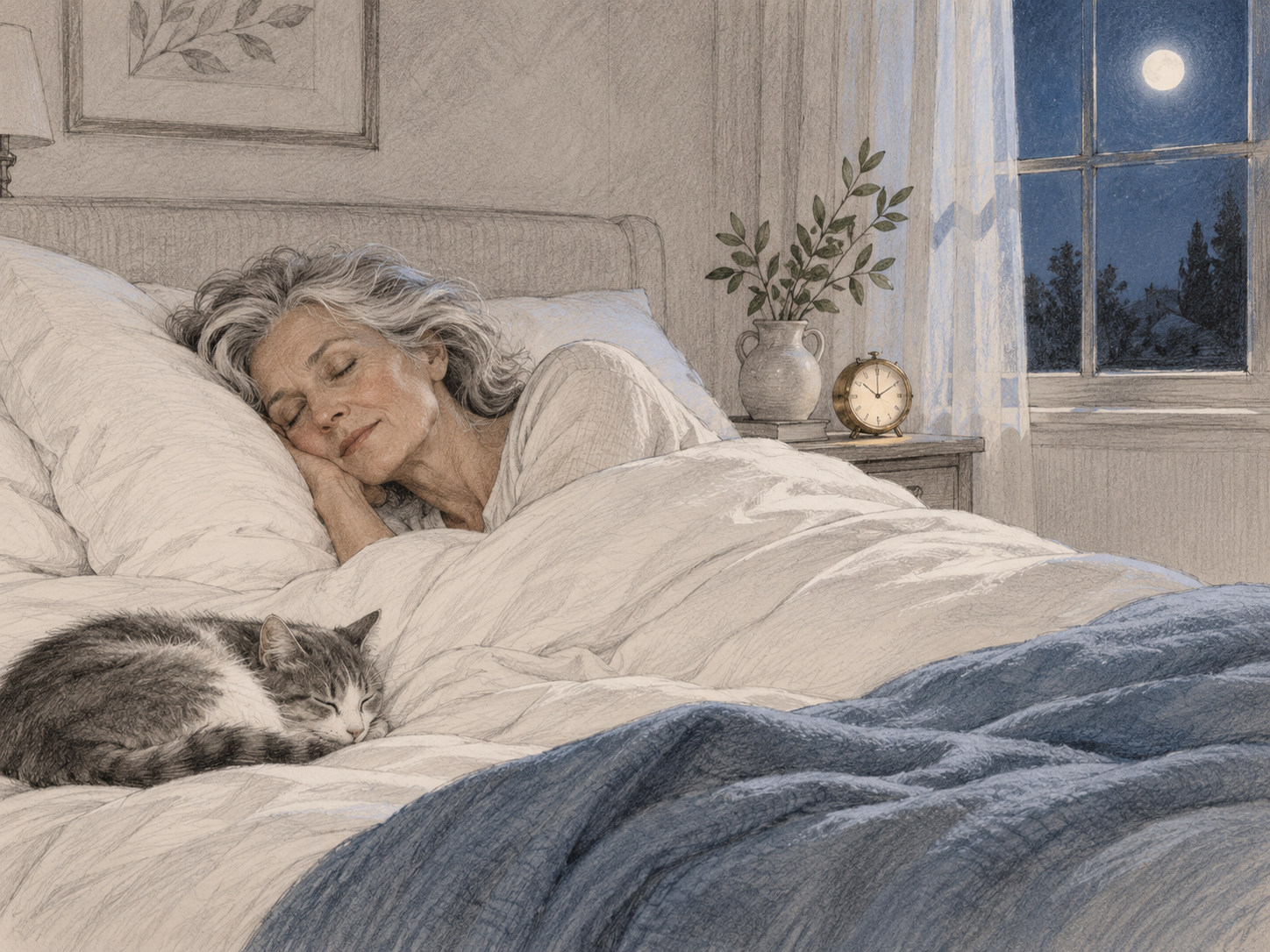
Sleep is not simply the period when we are unconscious. It is part of the work of maintaining a functioning human body. While we sleep, hormones are regulated, tissues are repaired, the immune system is supported, memories are consolidated and the brain gets a chance to do some of the maintenance work that waking life continually interrupts. When that recovery time is shortened night after night, we may still get through our days, but getting through the day is not the same thing as functioning at our best.
A Lot of Us Are Running Short
According to the CDC’s National Center for Health Statistics, nearly one-third of American adults reported sleeping fewer than seven hours a day in 2024. Among adults ages 50 to 64, the percentage was even higher.
That matters because sleep often becomes more complicated as we age. Menopause, pain, medications, nighttime urination, caregiving, stress and chronic health problems can all interfere with sleep, sometimes so gradually that we begin to treat waking repeatedly or dragging ourselves through the morning as an inevitable part of getting older.
Some changes in sleep do accompany aging, but that does not mean every sleep problem should simply be accepted. There is an important difference between sleeping differently and consistently failing to get the restorative sleep the body needs.
Your Metabolism Notices
One of the more interesting areas of sleep research involves insulin sensitivity. In a study of women who normally slept seven to nine hours a night, researchers shortened sleep by about an hour and a half. The women were not kept awake all night or subjected to anything particularly extreme. Their sleep was reduced by an amount that would probably sound familiar to many people trying to squeeze more into an already full day.
Even that relatively modest restriction increased insulin resistance, with particularly notable effects among postmenopausal women.
That is worth paying attention to because insulin resistance affects the body’s ability to manage blood glucose effectively and, over time, can contribute to metabolic disease. Sleep therefore does not belong in some separate category of “wellness” that we attend to only after diet and exercise are taken care of. It is part of metabolic health itself.
The Heart Does Not Get a Free Pass
Sleep also gives the cardiovascular system a different workload from the one it carries while we are awake. During healthy sleep, heart rate and blood pressure normally decrease. When sleep is chronically shortened or repeatedly disrupted, the body loses some of that recovery time.
Research has linked inadequate and poor-quality sleep with increased risk of hypertension, coronary heart disease and stroke. Experimental sleep deprivation has also been associated with changes in inflammatory activity, glucose metabolism, stress hormones and autonomic function.
One bad night is not going to cause heart disease. The more important question is what happens when inadequate sleep becomes the pattern for years. Healthy aging is influenced by cumulative load, and sleep may be one of the places where that load quietly builds.
What Does Sleep Have to Do With Aging?
The connection becomes especially interesting when researchers look at aging itself. Animal studies have found that acute sleep deprivation can produce metabolic changes that overlap with some of the changes seen with aging.
That does not mean staying up late literally makes you several years older overnight. It does raise a useful question about what we sometimes attribute too quickly to age.
Fatigue, slower thinking, poorer glucose regulation, reduced resilience, difficulty concentrating and slower physical recovery can all become more common as we get older. They can also be made worse by inadequate sleep.
If we automatically call every decline “aging,” we may overlook something that can actually be addressed.
We Have Become Very Good at Buying Recovery
There is now an enormous market built around recovery. We can buy supplements, powders, wearables, cold plunges, red-light devices, elaborate mattresses and increasingly sophisticated ways to measure every hour of the night.
Some of those things may be useful. None of them changes the basic requirement that the body needs enough time to sleep.
You cannot supplement your way around a body that is consistently deprived of recovery. Before spending money trying to optimize sleep, it may be worth asking the much simpler question: Am I giving myself enough opportunity to sleep in the first place?
For most adults, that generally means at least seven hours, although individual needs vary. Quality matters too. Seven hours in bed interrupted repeatedly by pain, sleep apnea, hot flashes or frequent waking may not provide the same restoration as seven hours of relatively continuous sleep.
When sleep problems persist, figuring out why they are happening is often more useful than simply trying another product designed to make us sleepy.
Sleep Deserves a Promotion
We talk about nutrition, movement, strength and social connection when we talk about healthy aging, and we should. But sleep belongs in that same conversation because preserving health is not just about avoiding disease. It is about preserving function: the ability to think clearly, move confidently, recover from exertion, adapt to stress and continue doing the things that make life feel like our own.
That is what I mean when I talk about our capable years.
We spend a great deal of time asking how to add more healthy years to our lives. One of the simplest places to begin may be protecting the hours when the body is trying to repair the years we already have.
You cannot outrun sleep debt forever. Eventually, the body sends the bill.
The Performance Side of Sleep
There is another side to this conversation. What happens when the person who is sleep deprived is an athlete making a split-second decision, a coach trying to read a game, a leader managing a crisis or a professional responsible for other people?
I explore that question in the companion article, “You Cannot Out-Discipline Sleep Deprivation,” at StrongDynamics.com. The biology is the same, but the consequences look very different when performance is on the line.
Sources
CDC, National Center for Health Statistics, Short Sleep Duration and Sleep Difficulties Among Adults: United States, 2024
National Heart, Lung, and Blood Institute, How Sleep Works: Why Is Sleep Important?
National Institutes of Health, Chronic Sleep Deficiency Increases Insulin Resistance in Women, Especially Postmenopausal Women
Mullington et al., Cardiovascular, Inflammatory and Metabolic Consequences of Sleep Deprivation
Sengupta et al., Sleep Deprivation and Aging Are Metabolically Linked Across Tissues
Keep Exploring
Sleep is one part of a much larger recovery system. These pieces explore how stress, energy and cellular health connect with the way we feel and function.
When Emotional Stress Becomes Physical
How chronic stress can affect sleep, concentration, energy and the nervous system.
The Biology of Shame
Why difficult experiences can continue to affect the body long after the original event has passed.
Your Cells Need Energy, Too
A closer look at mitochondrial health